How to Install HTNFW on a Cloud Server Host
This guide explains how to install the HTNetwork HTNFW Package on a cloud server host.
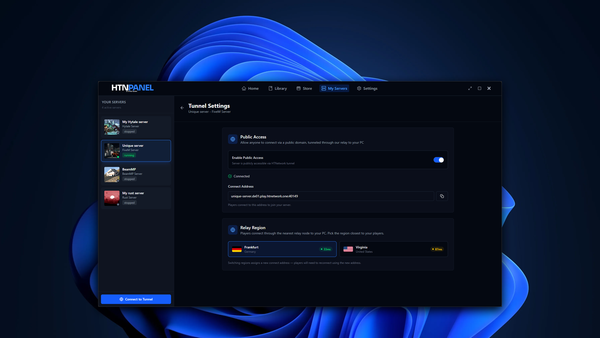
Because HTNFW installs through HTN Panel, you first need to install and set it up on your own PC, then manually upload the server files to your hosting provider using FTP/SFTP.
Unlike the vMenu packages, HTNFW also uses a database, so you will also need to export the database from your own PC and import it into your hosting provider’s database.
Step 1: Install HTNFW on your own PC first
Before uploading anything to your cloud host, you need to install the HTNFW package locally through HTN Panel.
Follow this video first:
Once HTNFW has been installed on your PC, HTN Panel will create the full FiveM server files locally and set up the database needed for the package.
You will then use those files and database to move the server over to your cloud hosting provider.
Step 2: Download an FTP/SFTP app
To upload the server files to your cloud server, you will need an FTP/SFTP app.
We recommend using one of these:
WinSCP:
https://winscp.net/
FileZilla:
https://filezilla-project.org/
Your hosting provider should give you FTP/SFTP login details. These usually include:
- Host / server address
- Username
- Password
- Port
If you cannot find these details, check your host’s game panel or contact their support.
Step 3: Download HeidiSQL
Because HTNFW uses a database, you will also need a database tool.
We recommend using HeidiSQL:
https://www.heidisql.com/download.php
You will use HeidiSQL to export the HTNFW database from your own PC, then import it into the database provided by your cloud server host.
Step 4: Connect to your cloud server
Open your FTP/SFTP app and connect using the details provided by your host.
Once connected, locate your FiveM server files.
You should see folders and files such as:
resourcesserver.cfgcachetxData- other FiveM server files
The exact layout can be slightly different depending on your host.
Step 5: Open your local HTN Panel server files
On your own PC, open the server files that HTN Panel installed.
You need to find the local FiveM server folder, then open the:
resources
folder.
Inside this folder, you will see all the folders installed by the HTNFW package.
These are the files you need to upload to your cloud server.
Step 6: Delete your host’s existing resources
Before uploading the HTNFW resources, go to your cloud server’s:
resources
folder.
Delete the existing contents inside your host’s resources folder first.
This helps avoid old files, duplicate resources, or conflicts with the HTNFW package.
Do not delete the actual resources folder itself — only delete the folders/files inside it.
Step 7: Upload the new resources
Now copy all folders inside your local HTN Panel resources folder across to your cloud server’s resources folder.
You need to upload the folders from your PC into the server’s:
resources
folder on your host.
Depending on your internet speed and host, this may take a while.
Make sure the upload fully completes before continuing.
Step 8: Update your server.cfg
Next, open the local server.cfg file from the server HTN Panel installed on your PC.
You then need to open your cloud server’s server.cfg file as well.
Copy across:
- all
ensurelines from the HTN Panel-installed server.cfg - any extra configuration lines that your hosting provider’s server.cfg does not already have
- any HTNFW-related configuration lines
- any required resource start lines
- any database connection line if your host requires it
The most important part is making sure all HTNFW resources are being started correctly.
For example, the HTN Panel server.cfg may include lines like:
ensure mapmanager
ensure chat
ensure spawnmanager
ensure sessionmanager
ensure hardcap
ensure oxmysql
ensure htnfw
Your actual list may be different, so copy the lines from the server.cfg that HTN Panel generated on your own PC.
Do not blindly replace your host’s entire server.cfg unless you know what you are doing, as your host may already have important settings inside it, such as:
endpoint_add_tcp
endpoint_add_udp
sv_licenseKey
sv_hostname
sets tags
sv_maxclients
Instead, copy over the missing package/resource lines carefully.
Step 9: Update your database connection
HTNFW requires a database connection to work correctly.
Your cloud hosting provider should give you MySQL database details, usually including:
- Database host
- Database name
- Database username
- Database password
- Database port
In your server.cfg, look for the database connection line. This is usually similar to:
set mysql_connection_string "mysql://username:password@host/database"
or:
set mysql_connection_string "server=host;database=database;userid=username;password=password"
You need to update this line using the database details from your hosting provider.
If the database connection is wrong, HTNFW will not work correctly.
Step 10: Export the HTNFW database from your own PC
Open HeidiSQL on your own PC.
Connect to the local database created when HTNFW was installed through HTN Panel.
Once connected, find the HTNFW database.
You then need to export the database as an SQL file.
In HeidiSQL, you can usually do this by:
- Right-clicking the database.
- Selecting Export database as SQL.
- Choosing the database tables.
- Saving the export as a
.sqlfile on your PC.
This .sql file contains the database tables and data needed for HTNFW to work on your cloud host.
Step 11: Clear your host’s existing database tables
Before importing the HTNFW database, open your hosting provider’s database using HeidiSQL, phpMyAdmin, or the database tool your host provides.
Go into the database assigned to your FiveM server.
You need to clear the previous tables first.
This is important because old tables can conflict with the HTNFW database.
You can either:
- drop/delete the existing tables inside the database, or
- empty the database completely before importing the new SQL file
Do not delete the actual database itself unless your host tells you to. Only remove the existing tables inside it.
Step 12: Import the HTNFW database into your host’s database
Once the previous tables have been cleared, import the .sql file you exported from your own PC.
If using HeidiSQL:
- Connect to your host’s database.
- Select the correct database.
- Go to File.
- Click Run SQL file.
- Select the exported HTNFW
.sqlfile. - Run the import.
Wait for the import to finish fully.
Once complete, your host’s database should now contain the HTNFW tables and data.
Step 13: Check your server.cfg for important host settings
Before saving, make sure your cloud server’s server.cfg still includes your host’s required settings.
Do not remove important lines such as:
endpoint_add_tcp
endpoint_add_udp
sv_licenseKey
sv_maxclients
Your host may also require specific port or startup settings. Keep those in place unless your host tells you otherwise.
Also make sure your database connection line uses your cloud host’s database details, not the local database details from your own PC.
Step 14: Restart your FiveM server
Once the files have uploaded, your server.cfg has been updated, and the database has been imported, restart your FiveM server from your hosting provider’s panel.
After restarting, join your server and check that HTNFW has loaded correctly.
Troubleshooting
HTNFW resources are not starting
Check your server.cfg and make sure the correct ensure lines have been copied across.
Also make sure the folder names inside the resources folder match the names in the ensure lines.
For example:
ensure htnfw
requires the folder to be named:
htnfw
Your folder names may be different, so always match the ensure lines to the actual folder names.
Database connection errors
If you see database errors in console, check your MySQL connection string.
Make sure:
- the database host is correct
- the database name is correct
- the database username is correct
- the database password is correct
- the database port is correct
- the host allows external/database panel connections if needed
Also make sure you are using your hosting provider’s database details, not the local database details from your PC.
Tables are missing
If HTNFW starts but features are not working, the database may not have imported correctly.
Open your host’s database and check that the HTNFW tables exist.
If tables are missing, clear the database tables again and re-import the .sql file.
Old data or errors are still showing
This usually means the previous database tables were not cleared before importing.
Go back into your host’s database, remove the old tables, then import the HTNFW SQL file again.
Files are missing after upload
FTP uploads can sometimes fail or skip files.
Reconnect using WinSCP or FileZilla and compare your local resources folder with the cloud server’s resources folder.
If anything is missing, upload it again.
Server crashes or does not start
Check your host’s console/logs. This is usually caused by:
- missing resources
- incorrect
ensurelines - broken folder names
- incorrect database connection details
- missing database tables
- old database tables conflicting
- deleting required host files
- replacing the wrong part of
server.cfg
Summary
To install HTNFW on a cloud server host:
- Install HTNFW on your own PC using HTN Panel.
- Follow the setup video: https://youtu.be/4HslgAYMGa4
- Connect to your cloud host using FTP/SFTP.
- Delete the old contents inside your host’s
resourcesfolder. - Upload all folders from the HTN Panel-installed
resourcesfolder. - Open the HTN Panel-generated
server.cfg. - Copy over all required
ensurelines and any extra missing config lines. - Install HeidiSQL on your PC.
- Export the HTNFW database from your local PC.
- Clear the previous tables from your host’s database.
- Import the HTNFW SQL file into your host’s database.
- Update your database connection line using your host’s database details.
- Keep your host’s required server settings.
- Restart the server.
Your HTNFW package should then be running on your cloud-hosted FiveM server.